Asbestos testing and vermiculite before renovating
Asbestos in a pre-1990 house: where it hides, attic vermiculite, testing before the work, choosing a contractor and disposing of the debris in Montréal.
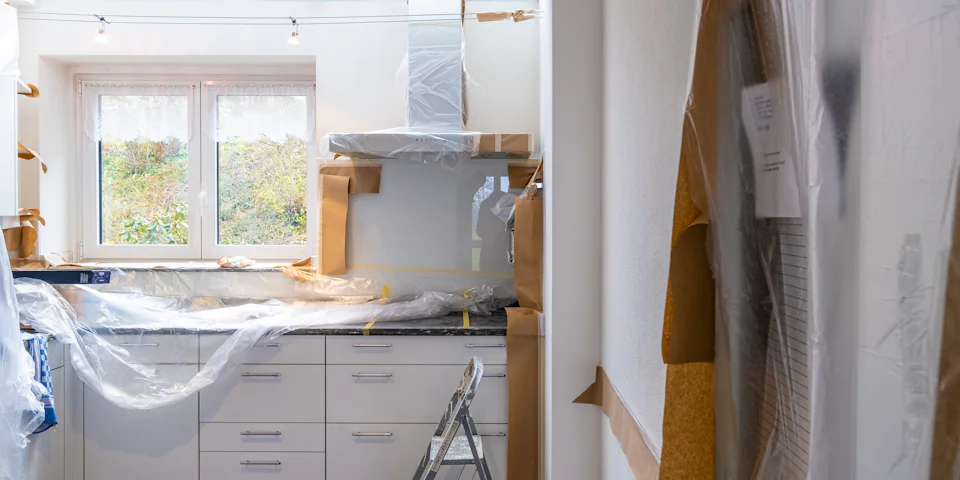
In Québec, building materials containing asbestos were mostly used between the 1930s and 1990. A house from that period, like many duplexes, triplexes and bungalows in Greater Montréal, may contain some, often with no visible sign. The danger comes from fibres released into the air when these materials are sawn, drilled, sanded or broken, which is exactly what happens during a renovation. This guide summarizes the advice of the Government of Québec and Health Canada (pages checked on October 28, 2026). It does not replace a professional’s advice; for a health question, ask your doctor or call Info-Santé 811.
1. Why it matters
According to Québec.ca, the problem is asbestos fibres in the air: when inhaled, they can cause asbestosis (a chronic lung disease) and certain cancers, including mesothelioma and lung cancer. The greater the exposure, the higher the risk. On the other hand, Health Canada says materials that are in good condition, tightly bound, sealed behind walls or floorboards, or isolated in an attic and left undisturbed do not pose a significant risk.
2. Where it may be in a house
Québec.ca lists several possible sources in a home, including:
- roofing: felt, building paper, shingles;
- blown-in or crumbly insulation, including attic vermiculite;
- acoustic tiles or ceilings, wall and ceiling coatings (stucco, for example);
- vinyl or linoleum flooring, their adhesives and underfloor membranes;
- window putty, soffit panels, exterior siding, asbestos-cement gutters;
- pipe and wire insulation, electrical boxes and panels, light fixture mounts;
- furnace, water heater, fireplace and wood stove.
Asbestos cannot be recognized by eye: only a lab analysis confirms it.
3. Vermiculite insulation
Vermiculite is a pebble-like insulation, silver-gold to grey-brown, often poured into attics. According to Québec.ca, some products sold between 1920 and 1990 may contain asbestos. If you have it:
- limit access to the attic, keep children out and store nothing there;
- if you must go up, wear a particle-filtering respirator and stay as briefly as possible;
- seal cracks and openings between the ceiling and the attic, and caulk around the attic hatch and light fixtures;
- never try to remove it yourself: removal and any renovation involving it go to a qualified professional.
Planning attic insulation? Read attic insulation: air sealing, venting, rebates first.
4. Intact materials: leave them alone
A material in good condition that is not handled is generally safe: avoid touching it and check its condition from time to time. Fibres can be released if it becomes crumbly or damaged, or if it is sawn, drilled, cut, sanded or broken. In those situations, Québec.ca recommends calling a qualified contractor.
5. Before the work: have it tested
- Test before you demolish. Before a major renovation, repair or demolition, Health Canada advises having a professional check for asbestos. According to Québec.ca, the inspection should be done by a qualified contractor or a specialized laboratory; a list of recognized laboratories is available from the IRSST (linked from the Québec.ca page).
- When in doubt, treat the material as if it contained asbestos.
- If asbestos is found, do not do the work yourself: hire a qualified asbestos removal specialist.
6. Choosing the contractor
Québec.ca suggests these criteria:
- RBQ licence: a specialty contractor needs subclass 2.7 (site work) or 7 (insulation, waterproofing, roofing and siding); a general contractor, subclass 1.2 (small buildings) or 1.3 (all buildings). Look up the licence and its subclasses (see how to check an RBQ licence).
- Training and experience with asbestos work, and a commitment to follow the Safety Code for the construction industry on this point.
- Track record: check for complaints with the Office de la protection du consommateur or a claim file with the RBQ.
- In writing: ask for a written quote (services, costs, timelines, insurance, warranties) and a written commitment on protecting the occupants’ health, included in the contract.
Québec.ca notes there is no official accreditation or certification program for this work in Québec, so the licence and the checks above are your benchmarks. To compare offers, see comparing contractor quotes.
7. During the work
- Stay out of the marked work area and turn off the house’s mechanical ventilation.
- The contractor must put debris in sealed containers, clean the area with a high-efficiency filter vacuum and wet materials as needed; workers wear a respirator, disposable coveralls and gloves.
8. Asbestos debris and renovation permits in Montréal and Laval
The debris does not go to the ecocentre: the City of Montréal page on dropping items off at an ecocentre (in French, updated October 23, 2026) lists asbestos among refused materials and says to contact an engineered landfill site (LET). Have the contract state that the contractor handles packaging, transport and disposal, and ask for proof of disposal.
Asbestos removal often comes with work that needs its own permit. In Montréal, according to the page on renovating the interior of a building (in French), a borough permit is required for work that affects the walls or foundations of a dwelling, or that changes the size, layout or use of a room. In Laval, a permit is required when the work changes the size or number of rooms, or the structure of the house (interior home renovation, in French). Schedule the testing before you apply: the result can change both the timeline and the price.
9. Before buying a house
Québec.ca advises asking the seller whether the property contains asbestos. The OACIQ "Declarations by the seller of the immovable" form, used by brokers, asks about insulation that may contain it, such as vermiculite.
10. The 2018 ban does not cover your house
Since December 30, 2018, a federal regulation prohibits importing, selling and using asbestos and products containing it, with some exceptions. It does not apply to asbestos already built into a building before that date, so existing materials in a house still call for the precautions above.
11. Checklist
- House built before 1990: assume it may contain asbestos.
- Vermiculite in the attic: don’t touch it, seal openings, store nothing there.
- Before demolishing, drilling or sanding: analysis by a lab or a qualified contractor.
- Asbestos found: a specialist does the work, never you; debris goes elsewhere than the ecocentre.
- RBQ licence and the right subclasses checked, written health commitment in the contract.
To plan what comes next, see also renovating a kitchen and renovating a bathroom. Renovation companies are listed for Montréal, Rosemont–La Petite-Patrie and Mascouche; you can also describe your renovation project and get quotes.
Renovation, construction and general work in the main cities
Montréal 3,211Laval 1,220Longueuil 442Terrebonne 442Mirabel 325Repentigny 236Brossard 210Blainville 209Mascouche 182Boisbriand 132