Basement renovation in Montréal: permits and valves
Finishing a basement in Montréal, Laval or Repentigny: when a permit is needed, the backwater valves to check before closing walls, and RBQ licences.
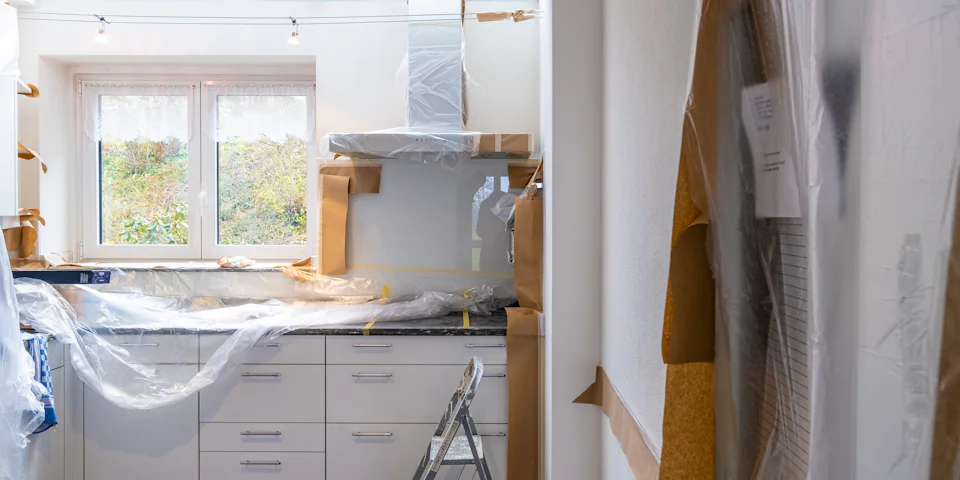
Winter is a popular time to finish a basement: a bedroom, a family room, an office. Before buying materials, check three things: the permit, protection against sewer backup and the companies’ licences. Here is what the official pages of a few Greater Montréal municipalities say.
1. Do you need a permit to finish a basement?
It depends on your city and, in Montréal, on your borough. On its page Renovate the interior of a building, the City of Montréal says:
- No permit for some minor cosmetic work, such as changing the flooring, repainting walls or replacing cabinets, a counter, a sink or a bathtub.
- A permit if the work affects the foundation, changes the structure or a wall (load-bearing or not), adds floor area, or changes the size, layout or use of rooms. Turning part of the basement into a bedroom often falls into this case.
- Plumbing, electrical work and electric or gas heating no longer need a municipal permit in Montréal, but they remain subject to the Régie du bâtiment du Québec rules.
For the application, Montréal requires, among other things, the certificate of location, a quote or cost estimate and plans. If a room’s area changes, you need scaled plans showing, among other things, where smoke alarms and ventilation equipment go; if the structure is affected, plans signed and sealed by an engineer. Fees depend on the cost of the work.
Elsewhere, the thresholds differ. In Laval, the page Rénovation résidentielle intérieure (in French) says a basement renovation needs a permit when the number of rooms or the structure changes. In Repentigny, many renovations only need an online declaration, but adding a bedroom, even in the basement, requires a permit (in French). In other towns, call the planning department before you start.
2. Backwater valves, before you close the walls
A finished basement is expensive to redo after a sewer backup. The City of Montréal explains that during heavy rain, water building up in the streets puts the sewer system under pressure: without backwater valves, or with badly installed ones, wastewater can back up into the basement.
- A valve goes on the drain pipe of each plumbing fixture or group of fixtures in the basement: toilet, sink, shower, washing machine, garage floor drain. In Montréal, the valves are mandatory under the municipal by-law on protecting buildings against sewer backups (11-010), and they have been required in all new buildings since 2011.
- Keep them accessible. The City notes that some valves can no longer be checked because flooring was laid over them. Plan an access hatch in the new floor.
- Ideally twice a year, check that they work and are not blocked. Valves can be in the wrong place, worn, or even chewed by rats.
- For water from the foundation drain, the City describes a sump pit of at least 600 × 450 × 450 mm (24 × 18 × 18 in.), fitted with a pump, ideally connected to batteries in case of a power outage.
Montréal recommends a plumbing contractor who is a member of the Corporation des maîtres mécaniciens en tuyauterie du Québec (CMMTQ), and asking for a certificate of compliance with the invoice. The City also offers financial aid (the RénoPlex program) under certain conditions: see the amounts and criteria on its page.
In Laval, by-law L-5057 (section 3.03.02, reproduced on a City diagram, in French) requires valves on every branch that receives water from fixtures below the level of the street crown, such as floor drains, sump pits, toilets and bathtubs. It forbids any valve on the main building drain, and a threaded plug on the floor drain does not replace the valve. In Repentigny, the City (in French) points out that valves have been mandatory since 1961, and since 1982 in the Le Gardeur sector.
3. A basement bedroom
Building codes require every bedroom to have at least one window that opens from the inside for emergency escape (Natural Resources Canada). Check this with your municipality before drawing the plans: enlarging an opening in the foundation affects the structure and needs a permit. A house on a septic system has extra rules: see our guide on septic tanks.
4. Before you finish the walls
- Fix water problems first: see our guides on foundation cracks and French drains.
- Measure radon: the test is done during the heating season, on the lowest lived-in level, and a finished basement counts. Better to know before you close the walls and lay the floor. See our guide on radon.
5. The right licences
A general contractor finishing the basement must hold an RBQ licence that covers the building. It may hand part of the work to subcontractors, and each needs its own licence: plumbing falls under subcategory 15.5 and electrical work under subcategory 16. Check the RBQ licence of each company, and ask for a written quote that states who gets the permit. To compare offers, see comparing contractor quotes.
To find companies, see renovation contractors in Montréal, in Repentigny and plumbers in Laval, or describe your basement project to get quotes.
Renovation, construction and general work in the main cities
Montréal 3,211Laval 1,223Longueuil 442Terrebonne 441Mirabel 325Repentigny 236Blainville 210Brossard 210Mascouche 182Boisbriand 132