GCR warranty on a new home in Quebec: coverage and claims
GCR warranty on a new house or condo in Quebec: covered buildings, pre-acceptance inspection, 1-, 3- and 5-year periods, exclusions and claim steps.
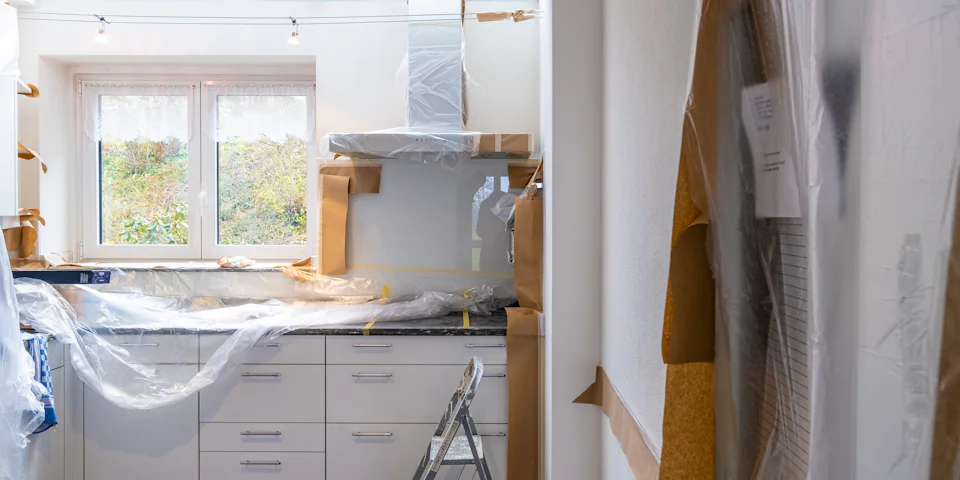
A new home bought from or built by a contractor in Québec is, in most cases, covered by a mandatory guarantee plan set out in the Regulation respecting the guarantee plan for new residential buildings. Since January 1, 2015, the plan has been administered by a non-profit organization, Garantie de construction résidentielle (GCR), under the supervision of the Régie du bâtiment du Québec. Here is what the guarantee covers, the deadlines to respect and the steps of a claim. This guide summarizes the regulation (text up to date as of July 1, 2026, checked on October 28, 2026); for a specific case, contact GCR, a notary or a lawyer.
1. Which buildings are covered
Under section 2 of the regulation, the guarantee applies to new, mainly residential buildings sold or built by a general contractor:
- detached, semi-detached or row single-family house;
- multi-family building from duplex to quintuplex (not in divided co-ownership);
- in divided co-ownership (condo): a single-family house, or a building with no more than 4 superimposed private portions (parking and storage spaces not counted).
Protection is automatic when you buy a covered building from an accredited contractor. It stays with the house: a later buyer benefits for the remaining term (section 16). If the building is not covered (a large condo building, for example), the RBQ suggests asking whether the contractor belongs to a private guarantee plan.
2. Before you sign: three checks
- RBQ licence: the contractor must hold a valid general contractor licence, in the name of the same company as on the contract. Check the RBQ licence (see also checking an RBQ licence).
- GCR accreditation and project registration: GCR's directory of accredited companies (in French) shows the accreditation status, inspection results, claims and arbitration decisions. If your project is not registered yet, the RBQ suggests asking the contractor.
- Written contract: the contract must include the guarantee contract, whose clauses cannot limit the plan's protections. Have every verbal agreement put in writing, including extra work.
3. What is covered before acceptance
If the contractor fails to meet its obligations before you take acceptance of the building (the "réception"), the guarantee covers (sections 9 and 13):
- either reimbursement of the deposits paid, up to $50,000, or completion of the work, depending on the type of contract;
- relocation, moving and storage of your belongings if you cannot take acceptance on the agreed date, up to $6,000 with receipts. The written request for these costs must be sent to the contractor, with a copy to the administrator, no later than 6 months after acceptance (section 17.1).
4. Pre-acceptance inspection and acceptance
Every covered building must be inspected before acceptance, jointly by the contractor and you, using a checklist supplied by the administrator; you may be assisted by a person of your choice (section 17). During this inspection you note together what remains to be finished and the apparent defects to correct, and you agree on a deadline of no more than 6 months for that work.
Key point: work to be completed and apparent defects and poor workmanship must be reported in writing at acceptance or, as long as you have not moved in, within the following 3 days (section 10). Take your time during the inspection and keep a signed copy of the list.
5. What is covered after acceptance
- Completion and apparent defects or poor workmanship reported at acceptance: at acceptance (or 3 days if not moved in);
- Poor workmanship existing but not apparent at acceptance: discovered within 1 year after acceptance;
- Latent (hidden) defects: discovered within 3 years after acceptance;
- Design, construction or production defects and soil defects: appearing within 5 years after the end of the work;
In every case, the problem must be reported in writing to the contractor and to the administrator within a reasonable time after you discover it. The guarantee also covers relocation during corrective work that makes the home uninhabitable and restoring the building after that work. For a single-family house, completion and repairs are limited to the contract amount, up to $300,000 (section 13). To recognize warning signs, see foundation cracks and French drains.
6. What is not covered
Section 12 excludes, among other things:
- defects in materials and equipment you supplied and installed yourself;
- normal behaviour of materials, such as cracks and shrinkage;
- repairs caused by inadequate maintenance, misuse or your own changes;
- normal wear and tear and force majeure events (earthquake, flood, exceptional weather);
- outdoor works such as pools, landscaping, sidewalks, driveways and surface drainage of the lot (except a negative slope of the lot);
- a seller's promises about energy consumption.
The exclusions for normal behaviour of materials and force majeure do not apply if the contractor did not follow the rules of the art or an applicable standard. Maintain the home from the first year: a defect caused by lack of maintenance is not covered.
7. Steps of a claim
- Report the problem in writing to the contractor and send a copy to the administrator (GCR): the copy interrupts prescription (section 18).
- At least 15 days after sending it, if the contractor has not acted or you are not satisfied, notify the administrator in writing. A file-opening fee applies; it is refunded if the decision is in your favour, fully or partly, or if the parties reach an agreement.
- The administrator asks the contractor to act, then inspects on site and issues a written decision.
- If you disagree with the decision, you must submit it to arbitration within 30 days of receiving it by registered mail, or agree with the contractor, within the same period, to go to mediation (section 19). The arbitration award is final and without appeal (section 20).
Keep a dated copy of every letter or email, photos of the problem and proof of sending.
New house or condo in Montréal, Mirabel or Terrebonne: permits and large buildings
Before you pay a deposit, ask the builder where its building permit stands. In Montréal, a permit is required before work starts, and every new construction project is subject to the by-law on site planning and architectural integration programs (PIIA), which adds fees and delays (page Obtenir un permis pour la construction d’un immeuble, in French, updated February 2, 2026). In Mirabel, a building permit is required to build, alter or enlarge a building, and a PIIA applies in some areas (page Urbanisme et permis, in French); in Terrebonne, some projects need an extra approval before the permit, for example in areas under a PIIA (page Permis, règlements et conseils, in French). Note the acceptance date set in the contract: if the contractor misses it, the guarantee covers relocation, moving and storage of your belongings, under the conditions in section 3.
For a condo, look at the size of the building before signing: the mandatory plan only covers buildings with no more than four superimposed private portions (section 1). For a condo in a tower, the RBQ suggests asking whether the contractor belongs to a private guarantee plan. And for what the guarantee excludes, such as landscaping or driveways, or to finish a basement later, see renovation companies in Mirabel, those in Terrebonne or contractors in Saint-Laurent.
8. Checklist
- RBQ general contractor licence and GCR accreditation checked, project registered.
- Written contract including the guarantee contract; extra work in writing.
- Careful pre-acceptance inspection, signed list kept; apparent defects noted at acceptance or within 3 days.
- Dates noted: acceptance (1 year, 3 years) and end of work (5 years).
- Every report in writing, to the contractor and to GCR, without delay.
For later work by other companies, see comparing contractor quotes. Detailed amounts and rules are on GCR's page Les protections qui s’appliquent (in French).
Once you have taken acceptance of the house, there may be work the guarantee does not cover: you can describe that work and ask for quotes.
Renovation, construction and general work in the main cities
Montréal 3,215Laval 1,223Longueuil 442Terrebonne 441Mirabel 326Repentigny 236Brossard 211Blainville 210Mascouche 182Boisbriand 132