Well water testing: when to test and who to call
Well water testing: how often to do it, common problems, the rules in Saint-Lazare and Mirabel, and when to call a well driller in Greater Montréal.
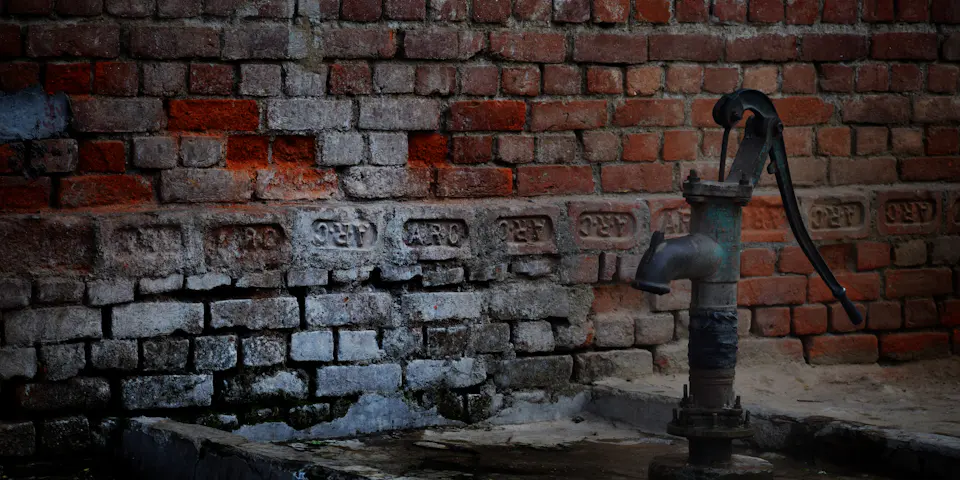
In Quebec, the owner of a private well is solely responsible for the quality of its water. No law requires you to have it tested, but testing is the only way to know whether it is safe to drink: clear water with no taste can still carry bacteria or metals.
1. When to test the water
According to Québec.ca (in French), microbiological testing should be done at least twice a year, and testing for chemical contaminants at least once during the time you use the well; depending on the results, more tests may be needed. In practice:
- bacteria tests (E. coli, coliforms, enterococci): ideally in spring and fall;
- chemical tests (for example arsenic, manganese, nitrates): at least once, then depending on the results and known problems in your area;
- an extra test after a flood, work on the well or the septic system, or if the water’s taste, smell or colour changes.
Use an accredited lab: it provides the bottles and sampling instructions. Québec.ca also suggests first asking your municipality whether there are specific contamination problems in your area.
2. Private wells in Saint-Lazare and Mirabel
Several Greater Montréal towns rely on wells, municipal or private. In Saint-Lazare, the City (in French) says the public water supply comes entirely from groundwater drawn by municipal wells, and reminds owners of an individual well, or of a small system serving fewer than 21 people, that it is up to them to make sure the water offered for drinking is of good quality. The owner of a private well must also pick up a free sign at the planning counter and place it where it can be seen from the street (by-law 667), and by-law 1123 forbids building a private well to draw groundwater on a lot served by the municipal water system, except for a few uses such as farming or geothermal heating.
In Mirabel, the City’s water page (in French) explains that several municipal wells supply the population and that an interactive map shows whether your property lies in a protection area around one of them; inside those areas, some activities, such as spreading fertilizers, are regulated or banned, and the City urges owners of an oil tank to check its condition.
3. Common problems
- Cloudy or orange water: iron or manganese, or sediment after heavy rain.
- Rotten-egg smell: often sulphur (hydrogen sulphide).
- Bacteria found: have the well disinfected, check its cap, the seal around the casing and the distance to the septic system, then test again.
- Running out of water or a pump that keeps starting: the pump, the pressure tank or the well’s flow need checking.
- Radon: according to Québec.ca, this gas can also enter a house through well water; see our guide on radon testing.
4. Water treatment: test first
Softener, carbon filter, UV lamp, reverse osmosis: each device treats specific problems. Before buying one, ask for the test that justifies it and choose a unit certified for the contaminant in question. After installation, a new test confirms it works, and the maker’s maintenance schedule (cartridges, lamp) must be followed.
5. Well driller or plumber: who to call
Drilling, deepening a well and installing pumps fall under RBQ licence subcategories 2.1 to 2.3: check the well driller’s licence before signing. The house plumbing beyond the pressure tank calls for subcategory 15.5. To find a company, see the pages for Saint-Lazare and Mirabel, plumbers in Mirabel, or describe your well problem and get quotes. See also our guide on septic tanks.
Wells and water pumps in the main cities
Laval 124Mirabel 50Terrebonne 37Longueuil 32Boucherville 19Brossard 17L'Assomption 16Blainville 15Boisbriand 12Mascouche 12