Water heater replacement: when and who installs it
Signs a water heater is wearing out, the 60 °C rule, whether a permit is needed in Greater Montréal and who may replace the unit.
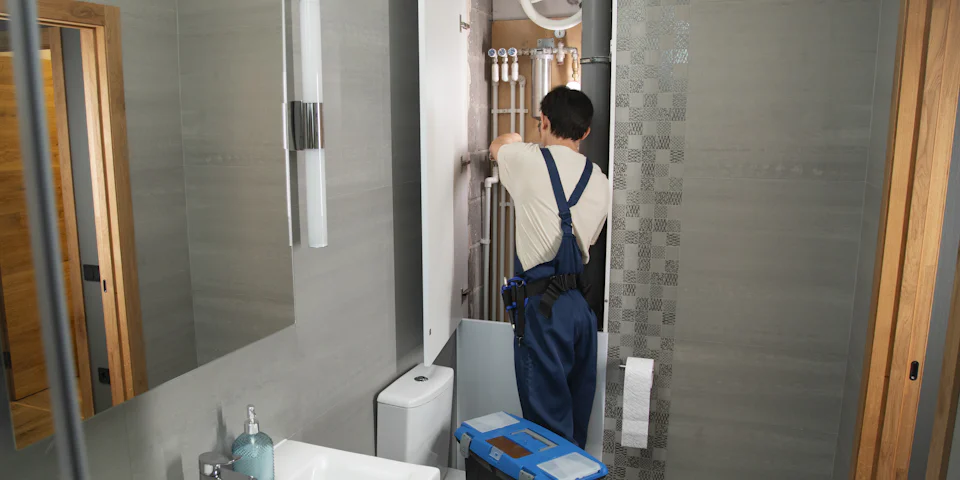
A tank water heater often lasts about ten years, sometimes a little longer. The day it fails, 40 or 60 gallons of water spread across the basement. It is better to plan the replacement than to wait for it: here is how to spot a worn-out unit, what the rules require and who must do the work.
1. Signs of a water heater at the end of its life
- Dampness or a small puddle under the tank, rust at its base or around the fittings.
- Hot water that is rusty, cloudy or smells bad while the cold water is clear.
- Less hot water than before, water that cools quickly, or cracking and rumbling while it heats.
- A unit more than ten years old: the manufacturing date is on the rating plate, often within the serial number.
2. The heater’s age and your insurance
Insurers often ask about the water heater’s age, and some policies set conditions for an older unit. Reread your policy or call your broker before the tank leaks: a planned replacement costs less than water damage, and the installation invoice proves the date.
3. The right temperature
In Quebec, the water in the tank must be kept hot enough, at least 60 °C, to limit the growth of bacteria such as Legionella. To prevent scalding, new installations must limit the water temperature at the shower and bath, usually with a mixing valve. So do not turn down the tank thermostat to avoid burns: that is the mixing valve’s job, and your plumber knows the requirement.
4. Replacing a water heater in Montréal, Boisbriand or Châteauguay: is a permit needed?
In several Greater Montréal municipalities, swapping a water heater in the same spot does not need a municipal permit, but the work is still governed by provincial rules. A few examples from the official pages (in French):
- In Montréal, the City says on its page Rénover l’intérieur d’un bâtiment (updated February 2, 2026) that it no longer issues permits for plumbing, electrical work or electric or gas heating, but that this work must meet the Régie du bâtiment du Québec rules.
- In Boisbriand, according to the City, replacing plumbing or the heating system needs no permit, but standards must be met.
- In Châteauguay, the City says plumbing or heating work that does not touch the walls needs no permit; adding, changing or removing a partition does.
If the new unit has to move to another room, or a wall must be opened or moved to fit it, check with your municipality before the work.
5. Who must install it
Replacing a water heater is plumbing work: it must be done by a contractor whose RBQ licence includes subcategory 15.5. For a gas unit, also ask whether the licence covers gas appliances. Check the licence before booking; a compliant installation also protects your insurance coverage.
A good quote states the model and tank size, removal of the old unit, the mixing valve if one is needed, the fittings, and both the manufacturer’s warranty and the labour warranty. To find a company, see plumbers in Boisbriand, in Châteauguay or in Montréal’s Sud-Ouest, or ask for quotes to replace your water heater.
6. If the water heater is already leaking
Close the cold water inlet at the top of the tank, switch off the heater’s breaker (or the gas) and open a hot water tap to relieve the pressure. For what comes next, see our guide on water leaks.
Plumbers in the main cities
Montréal 351Laval 157Longueuil 53Terrebonne 49Repentigny 34Mascouche 27Mirabel 25Châteauguay 16Boisbriand 16Blainville 15