Hiring a plumber in Montréal: RBQ licence and CMMTQ
Hiring a plumber in Greater Montréal: RBQ subclass 15.5, mandatory CMMTQ membership, a two-step check and what a written quote and contract should say.
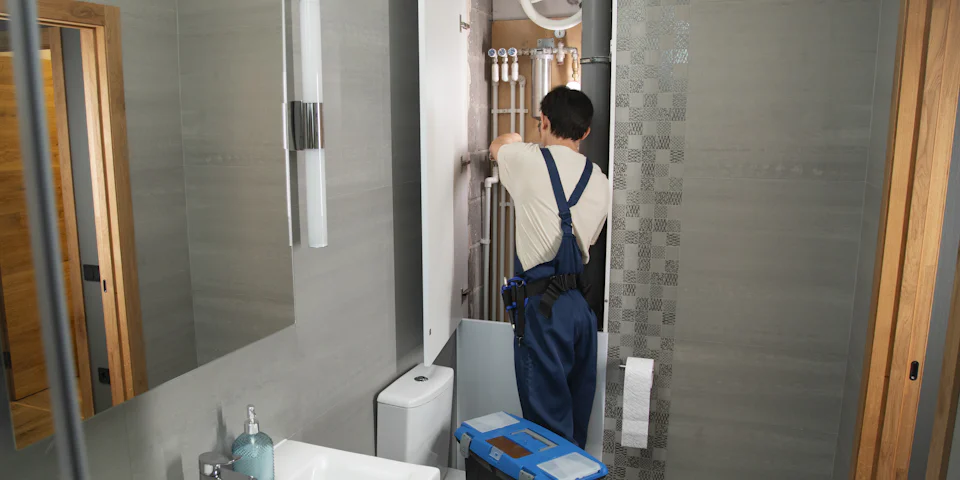
A blocked drain, new faucets, a new bathroom, backwater valves to install: in Quebec, whoever does plumbing work for you must meet two conditions set by law. They must hold a Régie du bâtiment du Québec (RBQ) licence with the right subclass, and be a member in good standing of the Corporation des maîtres mécaniciens en tuyauterie du Québec (CMMTQ, the Corporation of Master Pipe-Mechanics of Québec). This guide summarizes the Master Pipe-Mechanics Act (chapter M-4, up to date as of October 15, 2026), the RBQ’s plumbing licence page and the CMMTQ’s advice (in French), reread on November 1, 2026.
1. The RBQ licence: subclass 15.5
According to the RBQ, to do plumbing work in Quebec you need the appropriate contractor or owner-builder licence, including subclass 15.5, Contractor - plumbing. Heating, gas or oil burners, ventilation and refrigeration have their own subclasses in the same 15 series: a plumber is not automatically allowed to do all of it. The RBQ also reminds owners that they must hire only contractors holding such a licence for their plumbing work. Before you sign, look the company up and check which subclasses its licence lists (see also how to check an RBQ licence).
2. Why the CMMTQ issues these licences
The RBQ explains that the CMMTQ acts as a mandatary of the Government of Quebec: it ensures the professional qualifications of plumbing and heating contractors, decides on licence applications and changes, and prepares the qualification exams. That is why a plumber’s licence is in practice obtained through the CMMTQ. According to the RBQ, the CMMTQ logo on a contractor’s vehicle means the person holds the appropriate licence; a register check is still safer than a sticker.
3. Member in good standing: a legal requirement
Section 15 of the Master Pipe-Mechanics Act provides that no one may practise the trade of master pipe-mechanic unless they are a member in good standing of the Corporation. Under section 1, this covers in particular anyone who does business as a piping installation contractor or who does work, for others, on:
- plumbing (drainage, trap venting, hot or cold water supply, gas supply);
- heating systems, including hot water and steam systems;
- oil or natural gas burners (not propane);
- refrigeration and sprinklers (with exceptions set out in section 15).
Since 2024, the Act states that renovation, repair, maintenance and alteration count as construction work (section 1.1), so a simple repair in your home is covered. Section 17 reserves the titles “master pipe-mechanic”, “master plumber” and “master heating mechanic” (in French: maître en plomberie, maître en chauffage) to members.
The Act provides a few exceptions (section 15), including:
- owner-builders within the meaning of the Building Act;
- members of the Corporation des maîtres électriciens du Québec (CMEQ), for repair and maintenance of oil burners;
- plumbing piping located outside a building and not attached to it, and the water service pipe, the building sewer and the part of the main drain located outside the building;
- demolition of a piping installation.
These exceptions only concern CMMTQ membership: the work is still subject to the Building Act and to the RBQ licence that applies. For an outside connection, ask the contractor which subclass of their licence covers the work.
4. Check in two steps
- The licence: look the company up in our search or in the RBQ register, and confirm subclass 15.5 (or the heating subclass concerned). The name on the quote must match the licence.
- Membership: the CMMTQ recommends checking that the contractor is a member and holds the required subclasses, in its online member directory (in French) or with its qualification department (Service de la qualification).
Under section 20 of the Act, a person who is not a member in good standing and practises anyway, or leads people to believe they are entitled to, is liable to a fine of $5,000 to $25,000 (individual) or $15,000 to $75,000 (legal person). A “plumber” who appears neither in the RBQ register nor in the CMMTQ directory is not allowed to do this work for you.
5. Quote and contract: what the CMMTQ advises
The CMMTQ advises getting quotes from more than one contractor, checking with former clients and requiring a detailed written quote, whatever the type of work. It should state:
- the price of the work, including materials sold, and taxes;
- a description and the duration of the work, and the list of materials supplied by the contractor or by you;
- the hourly rate, if any, and any charges for transport or for using certain tools and equipment;
- the type and length of the warranty on parts and labour;
- how long the quote is valid, when the work will be done and the payment terms.
Once you have chosen a quote, the CMMTQ recommends a written contract stating at least the approximate start and end dates, the total price (fixed-price contract) or the hourly rate, materials supplied by the client, warranties and payment terms; the manufacturer’s warranty papers for parts supplied should also be handed to you. If the contract provides for it, you can sign the daily time and materials sheets, and ask to be given the defective parts that were replaced. The CMMTQ adds that the Consumer Protection Act may add to or change these requirements. To put several offers side by side, see comparing quotes.
6. Plumbing in Montréal and Terrebonne: what the cities ask
A good plumber also knows the rules of the city where the work happens. In Montréal, the City no longer issues plumbing permits, but if the job requires shutting off the water at the building’s service line, the shutoff must be booked ahead with the borough through 311: according to the page Demander la fermeture, l’ouverture ou la localisation d’une entrée d’eau (in French), only City crews may operate the outside valve, and the owner or their representative must be on site. Ask the plumber who books that appointment and build it into the schedule.
In Terrebonne, the City offers financial help (in French) to replace or upgrade backwater valves, sump pumps and their batteries: according to the page read on November 1, 2026, it can reach $200 per valve and $250 per pump or battery, for work done since August 9, 2024, with the application filed no later than six months after the work. The installation must be done by a professional holding a valid RBQ licence, whose invoice is one of the required documents. So always keep a detailed invoice in the licensed company’s name.
7. In an emergency
A leak or a frozen pipe makes you want to call the first number you find. First shut off the main water valve (see water leak: what to do and frozen pipes), then take two minutes to check the licence and membership, even by phone: ask for the RBQ licence number and the exact company name. Be wary of unsolicited offers at your door (see door-to-door sales). For a water heater, also read water heater replacement; if your project involves several trades, see general or specialty contractor.
Our directory lists only companies whose RBQ licence is active, with their subclasses; we do not recommend or rate any contractor. You can browse plumbers in Montréal, in the West Island or in Terrebonne, or describe your plumbing job and get quotes.
Plumbers in the main cities
Montréal 350Laval 157Longueuil 53Terrebonne 49Repentigny 34Mascouche 27Mirabel 25Châteauguay 16Boisbriand 16Blainville 15