Water damage insurance claim: step by step
Water damage: what home insurance usually covers, the first hours, Civil Code deadlines, the claims adjuster and the 15-day notice to the City.
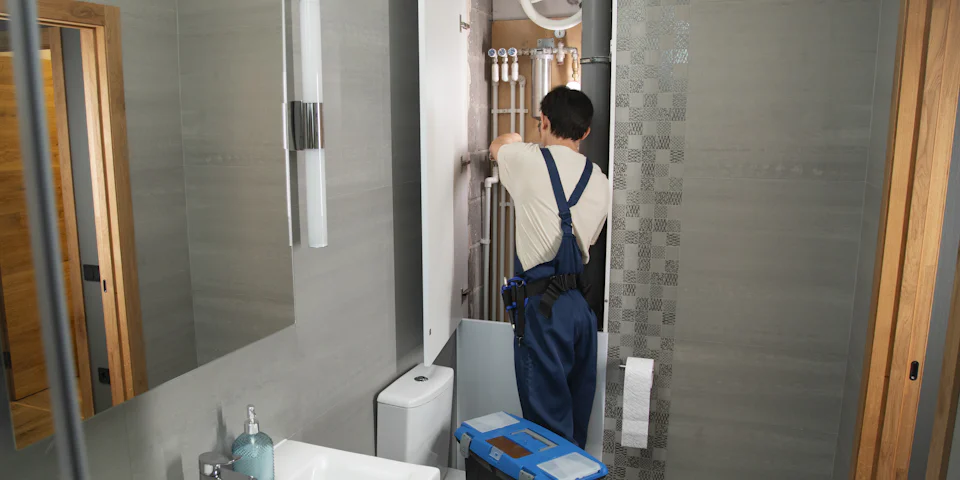
According to the Autorité des marchés financiers (AMF), water damage is the leading cause of home insurance claims. A pipe that freezes and bursts, a leaking water heater, a sewer backup: here is what to do in the first hours, what the law says about your obligations and the insurer’s, when to also claim from the City, and how to choose the company that will do the repairs.
1. Before anything happens: know what your policy covers
According to the AMF, a basic policy usually covers damage caused by a plumbing fixture (a broken dishwasher hose, an overflowing bathtub) and by a break in a public water main. However, water seeping in through the roof or basement and sewer backups are not covered unless you have bought additional protection (endorsements), and flood damage is generally excluded. Reread your policy now, not on the day of the leak, and ask your agent or broker your questions.
- Away in winter: if you leave home for a few days during the heating season, the AMF says your insurer may require someone to come by regularly, possibly every day, to check the heating, or that the water be shut off and the plumbing drained. Check the exact conditions with your insurer so you do not lose your right to claim.
- Major renovations: the AMF reminds you to tell your insurer about any change, including major renovations.
- Flood zone: your RCM (MRC) or municipality can tell you whether your lot is in a flood zone.
2. The first hours: stop the water and limit the damage
Shut off the main water valve and, if there is water near outlets or the electrical panel, stay away: see our guide water leak: what to do and, in a cold snap, frozen pipes. The AMF states that you are responsible for limiting the damage after a loss. For emergency work:
- it will be reimbursed only if the claim is accepted, so be careful before spending;
- keep every invoice and watch the cost and nature of the work;
- wait for the insurer’s authorization before any permanent repair;
- do not throw out damaged property: the insurer may need to examine it. Take photos and videos before moving anything.
3. Report the loss without delay
The Civil Code of Québec (article 2470) requires the insured to notify the insurer of any loss that may give rise to an indemnity as soon as they become aware of it. If the insurer was not informed and suffered prejudice as a result, it may invoke a policy clause that forfeits the right to indemnity. So call your insurer or broker the same day: they will guide you through the first steps and tell you whether a claims adjuster can come quickly.
At the insurer’s request, you must also, as soon as possible, tell it the circumstances of the loss, its probable cause, and the nature and extent of the damage, and provide supporting documents (article 2471). The AMF suggests preparing:
- a list of the damaged property, which you need to be compensated;
- documents proving the loss: invoices, photos, manuals;
- a clear explanation of what happened.
Be accurate: under article 2472, any misrepresentation forfeits the right to indemnity for the risk concerned, and the AMF adds that false or incomplete information can lead to the policy being cancelled and make it harder to get insurance later.
4. The claims adjuster
The insurer usually assigns a claims adjuster to handle the claim; this adjuster works for the insurer. According to the AMF, for a loss where the claim is no more than $5,000, the file may be handled by a person without an AMF certificate, supervised by a registered adjuster; you can, however, require that it be handled by the claims adjuster. You may also hire an independent adjuster at your own cost: before signing, check that they are listed in the AMF register and read the contract terms carefully.
5. The settlement offer and the payment deadline
Take time to review the offer: the AMF says negotiation is possible, for example to use another merchant, to do a repair differently or to ask for a new valuation. Discuss any change before repairing, cleaning or replacing your property, or accepting compensation. If the home is no longer livable because of a covered loss, your policy may reimburse additional living expenses: keep your receipts for lodging, meals and transportation.
The Civil Code (article 2473) sets the deadline: the insurer must pay the indemnity within 60 days after receiving the notice of loss or, if it asked for them, the relevant information and supporting documents.
6. If you disagree with the insurer
According to the AMF, start by explaining your dissatisfaction to the insurer, then, if needed, file a written complaint stating the settlement you want (the AMF provides a form). The company must send you an acknowledgement of receipt, handle the complaint fairly, give you its final answer in writing and offer to transfer your file to the AMF. The AMF may then offer conciliation or mediation, which is voluntary. Note: the complaint process does not stop the time limit for going to court.
7. When the City may be at fault: the 15-day notice in Montréal and Longueuil
If you believe the damage comes from the City’s fault, for example municipal work or a break in its network, a claim to the municipality comes on top of your insurance claim, with very short deadlines. In Montréal, the page File a claim against the City (updated March 27, 2026) says a claim for material damage must be made within 15 days of the incident, online, in person at a Bureau Accès Montréal or by mail; photos and an estimate can be added later. A lawsuit for material damage must be filed within six months. The City adds that its liability is not automatic, notably for a sewer backup if you did not have a properly working backwater valve.
In Longueuil, the claims office (in French) also asks for a written notice no later than 15 days after the event, with your contact details, the details of the claim, the date and the place. The City notes that the law requires proof of the damage, of the City’s fault and of the link between the two, that work needed to keep the damage from getting worse must be done right away, and that it cannot be held liable for a sewer backup when there is no backwater valve or the valve does not work properly. So check your valves before the rainy season (see backwater valves in the basement).
8. Repairs: a licensed company
Plumbing work falls under RBQ subcategory 15.5, and restoring the building (walls, floors, foundation) calls for a contractor whose licence covers that work. Check the RBQ licence of every company before signing, ask for a written quote you can pass on to the claims adjuster, and be wary of door-to-door offers after a loss: see door-to-door renovation scams. To compare offers, read comparing contractor quotes. After water damage, keep an eye on humidity: see mould and humidity.
To find a company, browse plumbers in Montréal, in Longueuil or renovation contractors in Repentigny, or describe the repairs to get quotes.
Plumbers in the main cities
Montréal 350Laval 157Longueuil 53Terrebonne 49Repentigny 34Mascouche 27Mirabel 25Châteauguay 16Boisbriand 16Blainville 15