Choosing an electrician in Montréal: RBQ licence and CMEQ
Choosing a residential electrician in Montréal: RBQ subclass 16, CMEQ membership, work owners may not do, the quote and contract, and city permits.
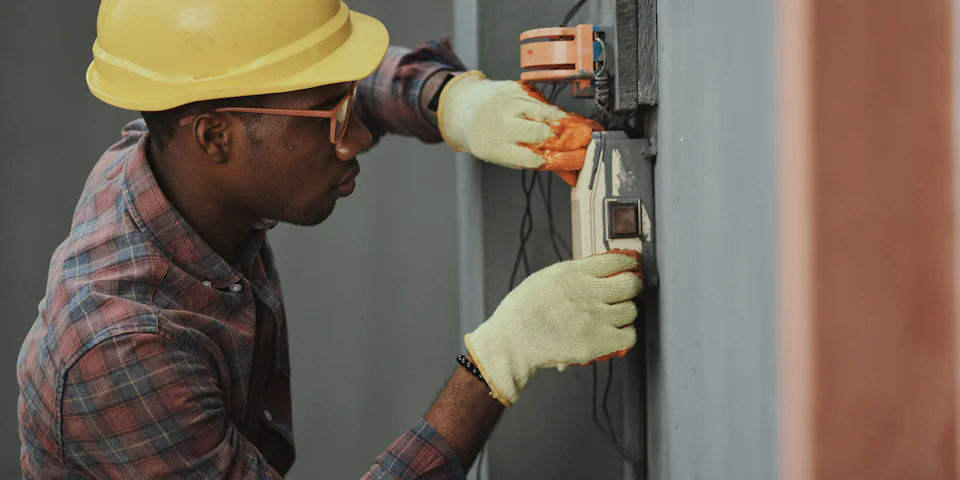
An outlet to add, a panel to replace, a charger to hook up: before you choose an electrician in Québec, the law calls for two checks. The company must hold a Régie du bâtiment du Québec (RBQ) licence with subclass 16, and it must be a member of the Corporation des maîtres électriciens du Québec (CMEQ, the Corporation of Master Electricians of Québec). This guide draws on the Master Electricians Act (chapter M-3, up to date as of October 15, 2026, read on October 30, 2026), the RBQ’s pages on the electrical licence (in French) and on work you can do yourself, and the CMEQ’s advice (in French), re-read on November 1, 2026.
1. The RBQ licence: subclass 16
According to the RBQ, anyone doing electrical installation work needs the appropriate contractor or owner-builder licence, including subclass 16, Electrical contractor. The RBQ adds that the CMEQ, acting as a mandatary of the Québec government, qualifies its members for this licence. The number on the quote can be checked in our search: subclass 16 must appear in the list (see also how to check an RBQ licence).
2. CMEQ membership: what the law says
The Master Electricians Act defines a “master electrician” broadly (section 1): in particular, anyone who does business as an electrical contractor, advertises as one, carries out or has carried out electrical installation work for others, or prepares estimates and bids for such work. Since 2024, the Act states that renovation, repair, maintenance and alteration count as construction work (section 1.1), so a small repair in your home is covered.
- Fines (section 21): a person who is not a member in good standing of the CMEQ and still carries on business as a master electrician, or gives the impression of being entitled to, is liable to a fine of $5,000 to $25,000 (individual) or $15,000 to $75,000 (corporation).
- Title (section 8): only members may use the title “Master Electrician” (maître électricien) and the initials M. El. after their name.
- Exceptions: the Act does not cover demolition of an electrical installation (section 19.1) and does not apply to owner-builders within the meaning of the Building Act (section 31); they still need their own RBQ electrical licence (see section 3).
The CMEQ sums up the rule this way: by law, every electrical contractor must be a member of the Corporation.
3. Can I do electrical work myself?
For the house you live in, the RBQ explains that you do not need a licence to build or renovate your single-family dwelling and its installations, except for work on electrical installations, installations designed to use or distribute gas, and petroleum equipment installations. The same exception applies to the private portions of a condo and to a chalet used by you or your family. That work goes to the holder of the right licence: in practice, an electrical contractor (the RBQ licence page also mentions an owner-builder licence with subclass 16, which requires its own qualification). Painting, laying a floor or installing cabinets is allowed without a licence; wiring a new circuit is not. Before any work, the RBQ also reminds you to notify your insurer and to ask your municipality whether you need a permit.
4. The declaration of work to the RBQ
According to the RBQ’s page on the declaration of work (in French), the electrical contractor or owner-builder must declare to the RBQ the construction work they carried out that is covered by Chapter V (Electricity) of the Construction Code. This does not apply to work listed in a connection request made to the electricity distributor, or to work of no more than 10 kW that requires no replacement or addition of wiring. The declaration form for electrical installations is available on paper only. The electrician takes care of it: for a panel, a service entrance or new circuits, simply ask whether they will file the declaration.
5. Check in two steps
- The licence: look the company up in our tool or in the RBQ register, and confirm subclass 16. The name on the quote must match the licence.
- Membership: the CMEQ recommends checking that the contractor holds an electrical licence with its Trouver un entrepreneur tool (member directory, in French) or by phoning its professional qualification department (Direction de la qualification professionnelle).
An “electrician” who appears neither in the RBQ register nor in the CMEQ directory is not allowed to do this work for you.
6. Quote and contract: what the CMEQ advises
The CMEQ advises getting bids from more than one electrical contractor and requiring a written contract, which it calls your best protection. The quote should be written and detailed and include:
- the list of work to be done and materials supplied;
- the cost of the work before taxes;
- the hourly rate charged if extra work is requested;
- the approximate duration of the work;
- fees and allowances for travel.
The contract can be fixed-price (one overall price set in advance for a defined set of work) or hourly, “time and materials” (an hourly rate set in advance plus materials). Either way, the CMEQ recommends stating the full list of work and materials, the schedule, the total price or the hourly rate, the rate for extra work, the cost of the connection request if any, and the payment terms and deposits. It also points out that a contractor who approaches you at home without you contacting them first must hold, in addition to their licence, an itinerant merchant permit from the Office de la protection du consommateur, and that the contract must then be in writing (see door-to-door sales). To compare offers, see comparing quotes.
7. City permits and electrical work: Montréal, Verdun, Châteauguay
In Greater Montréal, most electrical work needs no city permit, but the work that comes with it may. In Montréal, the page on renovating the interior of a building (in French) says the City no longer issues permits for plumbing, electrical and heating work: that work follows provincial rules and is done by licensed contractors. A permit is still required when you touch the walls or foundations, or change the size or use of a room. The Verdun borough shows how this plays out on its page Need a permit in Verdun? (in French): no specific standard and no permit for an EV charger. For work that touches the walls, the borough refers you to its permit counter.
On the South Shore, the City of Châteauguay (in French) says electrical, plumbing or heating work that does not touch the walls needs no permit, while adding, changing or removing a partition does. Before walls are opened to rewire, ask the electrician who takes care of the permit, and have it written into the contract.
8. Common jobs: our other guides
Depending on your project, see also aluminum wiring and old panels, EV charger installation, smart thermostats and generators and carbon monoxide. If your project involves several trades, see general or specialty contractor: the electrical part must still be done by an electrical contractor.
Our directory lists only companies whose RBQ licence is active, with their subclasses; we do not recommend or rate any contractor. Browse electricians in Montréal, Châteauguay or Brossard, or describe your electrical work so licensed companies can respond.
Electricians in the main cities
Montréal 627Laval 341Longueuil 84Terrebonne 81Mirabel 67Repentigny 48Blainville 41Mascouche 39Brossard 33Saint-Eustache 31