Frozen pipes: what to do and how to prevent them
No water at the tap in a cold snap? How to thaw a frozen pipe safely, what to do if it bursts and how to keep pipes from freezing in Greater Montréal.
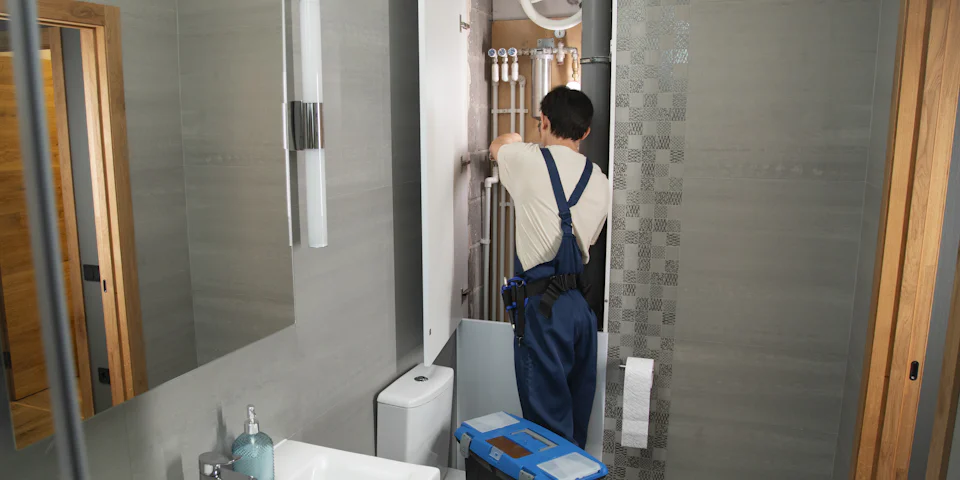
In a deep freeze, a pipe running through an outside wall, a crawl space, a garage or next to a poorly insulated foundation can freeze. The most common sign: a faucet that gives no water, or only a trickle. The real trouble often comes later, during the thaw: the ice may have split the pipe, and water starts running inside the wall.
1. The pipe is frozen but not broken
- Open the faucet it feeds: water moving again helps the ice melt, and pressure does not build up.
- Warm the pipe gently, starting from the faucet end: a hair dryer, warm towels, or a space heater kept well back and never left unattended.
- Never use a torch or an open flame: you could start a fire inside the wall and damage the pipe.
- Turn up the heat in the room and open the cabinet doors under the sink to let warm air in.
- If you cannot find the frozen spot, the pipe is inside a closed wall, or nothing changes after a while, call a plumber.
2. The pipe has burst
Close the main water valve right away, stay away from water near outlets and the panel, then follow our guide water leak: what to do. Take photos before any repair: a frozen pipe that bursts is a common claim, and your insurer will want to know whether the house was heated (see making a water damage claim).
3. A frozen water service line: advice from Repentigny and Montréal
The most exposed pipe is often the water service line itself, where it comes through the foundation. On its sewer and water page (in French), the City of Repentigny advises, if it freezes, turning up the heat and warming the water valve near the meter by hand with a hair dryer; if that does not work, you need a plumber to thaw the line. It also recommends keeping the area where the line enters heated at all times, asking someone during an absence of a few days to open the cold tap every day and let it run for a few minutes, and, once the line has thawed, leaving a thin stream of cold water running.
In Montréal, the City (in French) lists a sudden leak after a freeze or a thaw among the cases where you should call 311 immediately, along with a constant hissing in the pipes. Only the City may close the outside valve on the service line.
4. Preventing freezing before the cold sets in
- Insulate pipes along an outside wall, in a crawl space or a garage, and seal cold-air leaks near them (gaps around pipes, poorly insulated rim joists).
- Close the indoor valve that feeds each outdoor faucet, then drain the faucet before winter; disconnect the garden hose.
- In a cold snap, leave the cabinet doors open under sinks that sit against an outside wall.
- Do not turn the heat down too far in rooms you rarely use, in the basement or upstairs.
- A certified heating cable can protect an exposed pipe: install it following the maker’s instructions, without overlapping it.
- Away for several weeks? Keep the house heated and have it checked regularly, or have the plumbing drained. Also check your insurance conditions for winter absences.
5. When to call a plumber
A pipe that freezes in the same spot every winter points to a problem to fix: a pipe too close to a cold wall, missing insulation, a service line buried too shallow. A plumber can move the pipe, insulate it or protect it. In Quebec, this work requires an RBQ licence with subcategory 15.5: check it before booking. You can find companies among plumbers in Repentigny, in Terrebonne or in Montréal, and you can describe your freezing problem to get quotes.
Plumbers in the main cities
Montréal 351Laval 157Longueuil 53Terrebonne 49Repentigny 34Mascouche 27Mirabel 25Châteauguay 16Boisbriand 16Blainville 15